Introduction
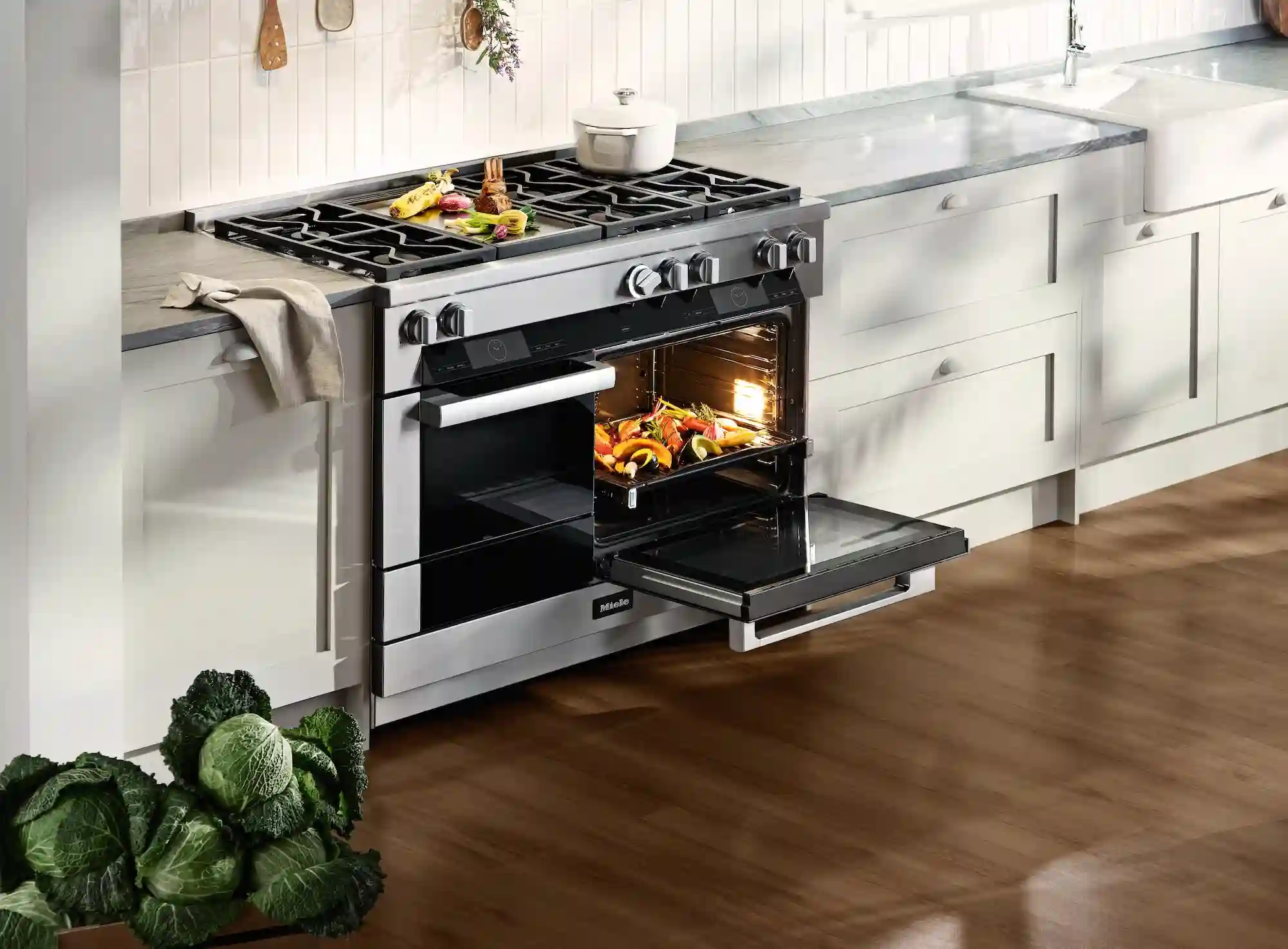
Ovens and ranges from the Miele collection represent precision German engineering designed for serious cooking enthusiasts. Whether you own a built-in oven, a freestanding range, or an induction cooktop, occasional troubleshooting may be necessary to keep everything performing at its best. This guide covers the most common faults and the steps you can take to address them.
Uneven Heating and Temperature Problems
If food bakes unevenly, a failed heating element is the most likely cause. In a conventional top-and-bottom heat mode, both elements should glow red when active. If one remains dark, it has burned out and needs replacement.
The convection fan, which circulates hot air for uniform results, can also fail. If the fan does not spin when a convection mode is selected, the motor, a thermal fuse, or the control board may be at fault. Listen for a humming sound without rotation, which suggests a seized motor bearing.
Temperature inaccuracy, where the oven consistently runs hotter or cooler than the set point, usually indicates a defective temperature sensor or thermostat. Verify with a standalone oven thermometer placed in the center of the cavity. A deviation of more than fifteen degrees Celsius warrants sensor replacement.
Cooktop Issues
Induction surfaces may fail to recognize cookware if the pot or pan lacks ferromagnetic properties or has a base diameter smaller than the zone minimum. Also consider that a cracked induction coil or damaged control electronics can cause a zone to remain inactive even with compatible cookware.
For radiant ceramic cooktops, a single zone that refuses to heat is typically the result of a burned-out element or a broken circuit. Cracks in the glass surface are a safety hazard and call for immediate replacement, as moisture can penetrate and cause a short circuit.
Gas burners that will not ignite via the electric igniter usually need only a cleaning. Food residue on the igniter electrode or clogged ports on the burner cap are the most common causes. Remove the cap and clean each port with a needle or thin wire, and wipe the igniter tip with a dry cloth.
Self-Cleaning and Safety Features
Pyrolytic self-cleaning heats the cavity to roughly five hundred degrees Celsius, reducing food residue to ash. If the cycle will not start, confirm that the door is fully closed and that the automatic door lock is engaging properly. During pyrolysis the lock activates automatically; never attempt to force the door open.
After a pyrolytic cycle, allow the oven to cool completely, usually one to two hours, before opening the door. Light smoke or a faint odor during the first use after cleaning is normal and dissipates quickly.
Catalytic liners, found in some models, absorb grease during normal cooking. They lose effectiveness over time and may need replacement every few years. Check the manual for your model’s recommended interval.
When Professional Help Is Needed
Replacing heating elements, servicing gas components, diagnosing electronic control boards, and repairing door-lock assemblies are tasks best handled by a qualified technician. Gas work in particular carries serious safety risks and should never be attempted without proper certification.
Always use an authorized service center to ensure genuine parts and to preserve warranty coverage. Before scheduling a visit, note the exact model number, serial number, and any error codes displayed, as this information speeds up diagnosis.