Introduction
Dedicated wine refrigerators and beverage centers provide optimal storage conditions for wine collections and specialty drinks. These specialized appliances from Miele maintain precise temperatures, appropriate humidity levels, and vibration-free environments. Even premium units, however, can develop issues over time. This guide will help you diagnose and resolve the most common problems.
Temperature Irregularities
Inconsistent cooling is the most critical issue for any wine storage appliance. If the internal temperature deviates more than two to three degrees from the set point, begin by examining the door gasket. Even a small gap allows warm air to infiltrate the cabinet continuously. Press a sheet of paper against the closed door; if it slides out easily, the seal needs replacing.
Next, ensure the ventilation openings are unobstructed and there is adequate clearance around the unit, typically at least five centimeters on each side and ten centimeters behind. A dust-covered condenser coil significantly reduces heat dissipation and should be vacuumed with a soft brush attachment every six months.
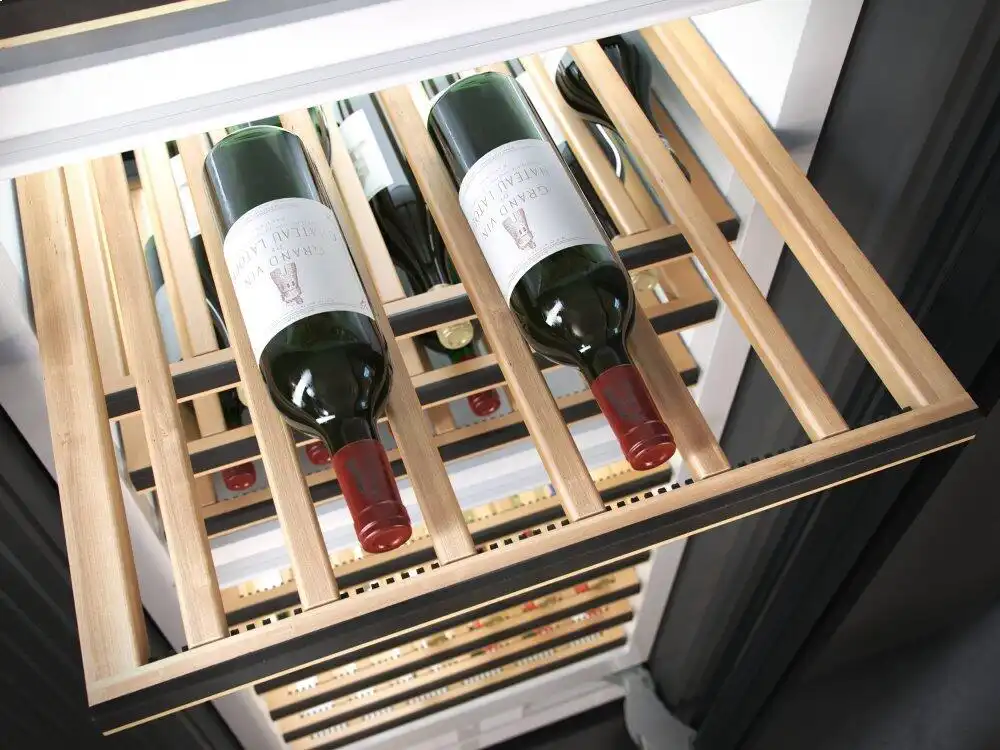
Overloading the cabinet also impairs cooling: overstacked shelves restrict internal air circulation, creating warm pockets where bottles are not held at the correct temperature.
Vibration and Noise Concerns
Vibration is particularly harmful to wine, as it disturbs sediment and can accelerate chemical reactions that degrade flavor. If your cooler has begun vibrating noticeably, first check whether it is perfectly level by placing a spirit level on top. Adjust the feet until the bubble is centered.
A steady hum from the compressor is normal, but sharp clicks, rattling, or buzzing sounds deserve attention. Loose internal brackets, worn compressor dampeners, or contact between the cabinet and surrounding cabinetry are frequent noise sources. In some cases, expanding and contracting plastic liner panels produce cracking sounds during temperature shifts; this is cosmetic and not a defect.
If the compressor cycles on and off more frequently than usual, often called short cycling, the condenser may be dirty, the thermostat may be miscalibrated, or the refrigerant charge may be low. A technician can measure pressures and diagnose accurately.
Humidity and Condensation Problems
Condensation on interior walls or the glass door can result from frequent opening, a deteriorated gasket, or a malfunctioning dehumidification system. In dual-zone models, some moisture on the partition between temperature zones is normal and requires no action.
Excessive interior humidity risks mold growth on corks and labels. Inspect the drain channel for blockages: clear it with a thin wire or pipe cleaner and flush with warm water. If condensation persists despite a clean drain and intact gasket, the humidity sensor or the electronic control module may be faulty.
For units with UV-filtered glass doors, verify that the door heater, a thin heating element embedded in the door frame designed to prevent external condensation, is functioning. A cold door frame in a humid room that fogs up constantly suggests a failed door heater.
Maintenance Recommendations
To keep your wine storage appliance in peak condition, follow a simple schedule. Monthly, wipe interior surfaces with a solution of baking soda and water. Every six months, vacuum the condenser coils and inspect the door gasket for elasticity and signs of cracking. Annually, have a qualified technician verify the refrigerant level and compressor health.
Use LED-only interior lighting if your model offers the option. LEDs emit virtually no heat and will not influence the storage temperature. Avoid placing the unit near heat sources such as ovens, dishwashers, or direct sunlight, and maintain a stable ambient room temperature for the most consistent performance.